


Algoma Public Health


Radon


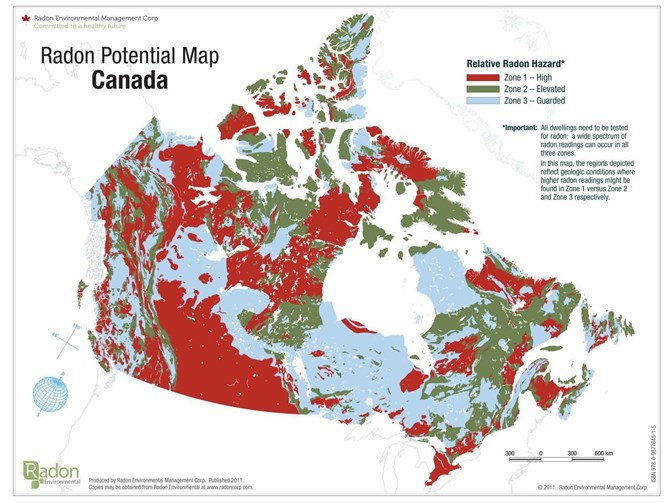
Radon can be found in the soil all over Canada. Breathing in radon gas for extended periods of time can be hazardous. Did you know radon is the second leading cause of lung cancer, second only to smoking? Learn more about radon and stay informed on how to protect yourself and those you care for to limit your exposure to radon gas.
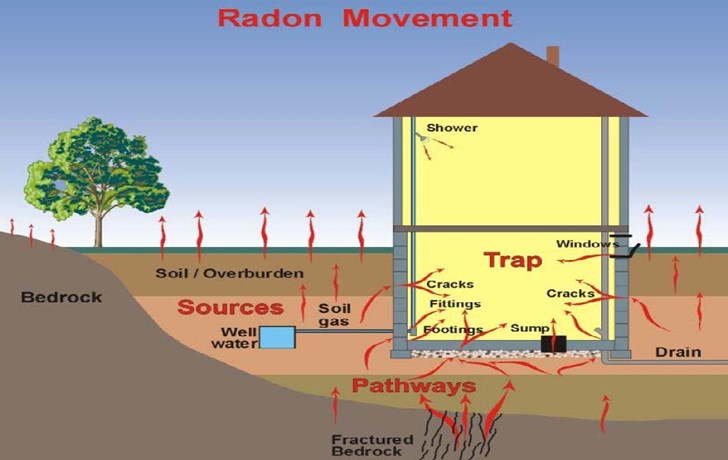
Radon is a colorless, odorless, radioactive gas that is found naturally in the environment. Radon is produced when uranium found in rock and soil breaks down. Radon gas naturally rises beneath us into our atmosphere and can get into any type of building or home.
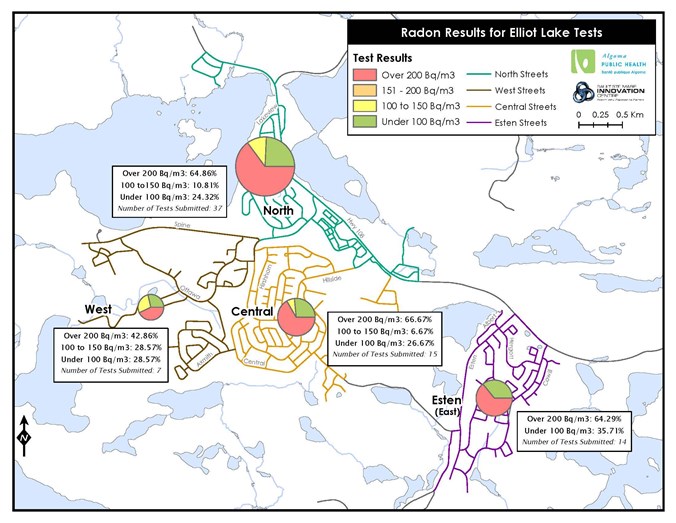
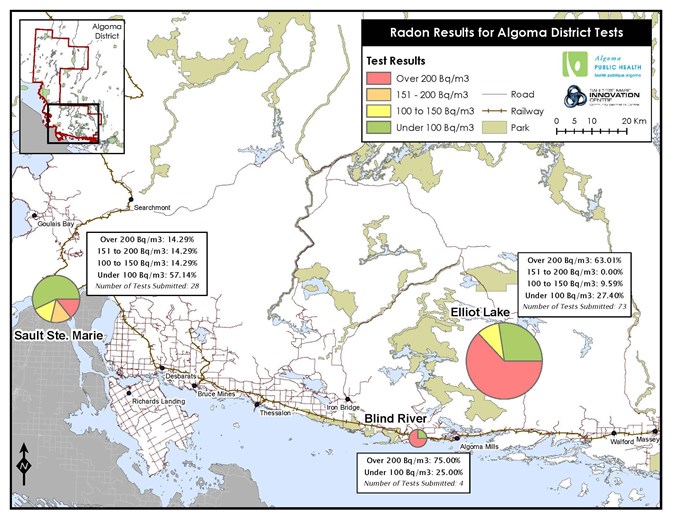
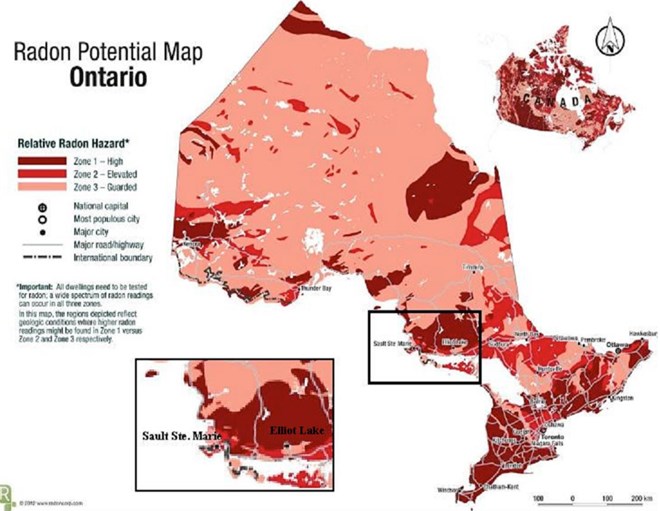
Radon in living areas is measured in Becquerel's per cubic meter (Bq/m3). Levels of radon can differ depending on the location and construction of the building or home. Health Canada recommends actions be taken if radon levels exceed 200 Bq/m3. The CROSS-CANADA SURVEY OF RADON EXPOSURE IN RESIDENTIAL BUILDINGS OF URBAN AND RURAL COMMUNITIES, states that 1 in 6 (16.4%) of Central Region (Ontario & Quebec) households contain radon levels at or above 200 Bq/m³.
Water from some deep wells may also contain dissolved radon. This can lead to exposure by either drinking the water or inhaling the radon that has been released when that water is agitated (e.g., showering, washing clothes or cooking). While drinking water containing radon has not been shown to be harmful to health, the additional radon released into the air in water vapor may increase the inhalation hazard.
Date of Creation: June 1, 2015
Last Modified: March 9, 2026